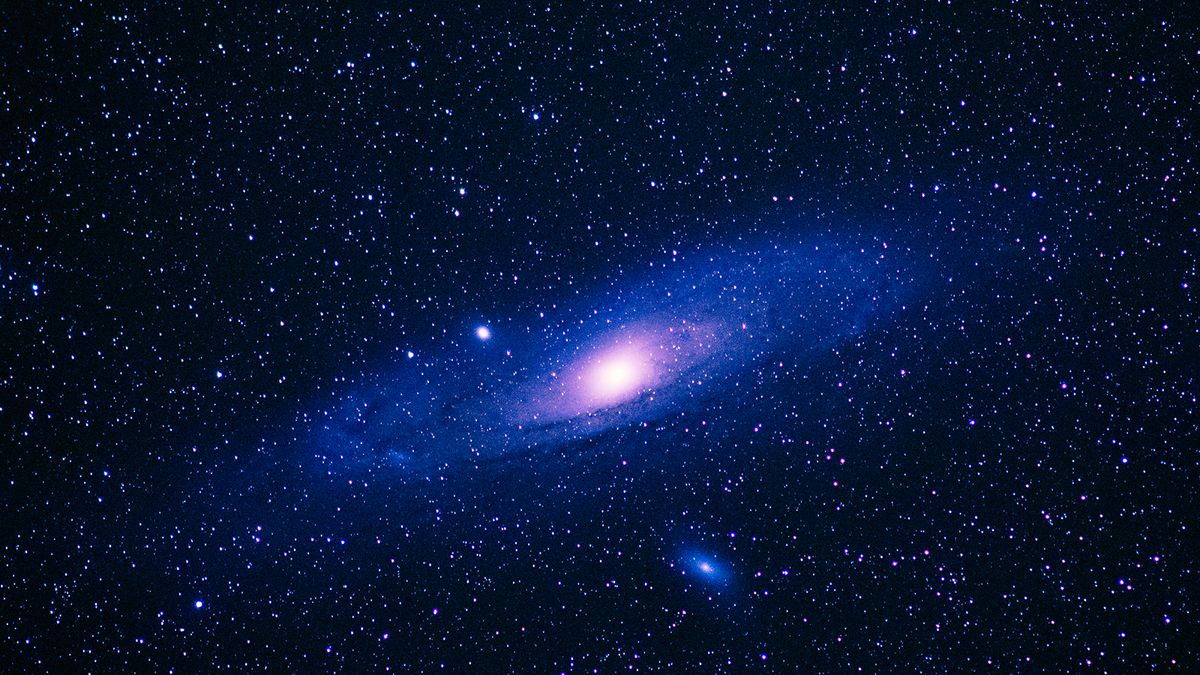
The Life Cycle of Galaxies: From Formation to Cosmic Dust
The life cycle of galaxies is a captivating journey that spans billions of years, encompassing stages from their formation to their eventual demise into cosmic dust. Initially, galaxies form from vast clouds of gas and dust that collapse under their own gravity, leading to the birth of stars. These stars congregate in various structures, leading to the development of distinct galaxy types, such as spiral, elliptical, and irregular. Over time, interstellar matter fuels star formation and galactic evolution, shaping the characteristics and dynamics of the galaxy.
As galaxies age, they undergo several transformations influenced by factors like gravitational interactions with neighboring galaxies and black hole activity at their centers. Some galaxies may merge, triggering periods of intense star formation, while others may lose their star-forming gas and become passive. Eventually, they can reach a stage where they no longer form new stars, leading to an accumulation of stellar remnants and cosmic dust. This cosmic dust can later be incorporated into new star systems, completing the cycle of galactic life and paving the way for future generations of galaxies.
Counter-Strike is a highly popular multiplayer first-person shooter game that emphasizes team-based gameplay and strategic planning. Players can choose to play as terrorists or counter-terrorists, with the goal of defeating the opposing team. For gamers looking to enhance their experience, check out the Top 10 Samsung Galaxy Ultra Accessories that can elevate mobile gaming to a new level.
Are We Alone in the Universe? Exploring the Possibility of Life in Other Galaxies
The question of Are We Alone in the Universe? has fascinated humanity for centuries. With the advancement of technology and the discovery of thousands of exoplanets, the possibility of life in other galaxies seems more plausible than ever. Researchers are particularly interested in identifying planets located in the 'Goldilocks Zone,' where conditions might be just right for life as we know it to thrive. In order to explore this idea further, scientists are employing various methods, including space telescopes and advanced simulations, to analyze the potential for alien life forms.
Moreover, recent missions such as the James Webb Space Telescope aim to gather more data about the atmospheres of distant worlds. By studying these atmospheres, we can detect potential biosignatures—chemical indicators of biological activity. Some of the key considerations in this search include:
- Understanding extremophiles on Earth that can survive in extreme conditions.
- Investigating the implications of microbial life existing in subsurface oceans on moons like Europa and Enceladus.
- Assessing the feasibility of interstellar travel to explore distant planets within our galaxy.
What Are Galaxies Made Of? Understanding Their Composition and Structure
Galaxies, the vast collections of stars, gas, dust, and dark matter, showcase the universe's rich tapestry. At the core of a galaxy lies a supermassive black hole, surrounded by a rotating disk of stars and interstellar material. In addition to these components, galaxies typically contain young stars, which are in the process of formation, as well as aging stars nearing the end of their life cycles. The interactions among stars, gas clouds, and dark matter contribute significantly to a galaxy's overall structure and evolution.
The composition of a galaxy can be categorized into several key elements. Stellar populations are composed of various types of stars, ranging from hot blue stars to cooler red dwarfs. Furthermore, nebulae, which are clouds of gas and dust, serve as the birthplace for new stars, while star clusters group stars that formed around the same time. Finally, the elusive and invisible dark matter envelops galaxies, exerting gravitational forces that shape their formation and dynamics, highlighting the complexity of their structure.